What Are The Shapes Of Coriolis Mass Flowmeters?
Leave a message
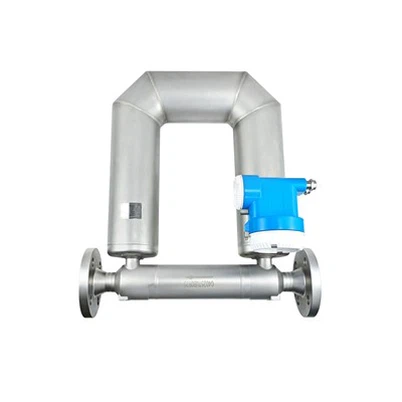
Common Coriolis mass flowmeter shapes include tubular, insertion, and linear.
1. Tubular Coriolis Mass Flowmeter
The tubular Coriolis mass flowmeter is the most common shape. It consists of two perpendicular U-shaped tubes. When fluid passes through the U-shaped tubes, inertia creates a pressure difference. By measuring this pressure difference, the mass flow rate of the fluid can be calculated. Tubular flowmeters are simple in structure, easy to use, and have a wide measurement range.
2. Insertion Coriolis Mass Flowmeter
The insertion Coriolis mass flowmeter is another common shape. Unlike tubular Coriolis flowmeters, insertion Coriolis flowmeters are inserted into the fluid channel for measurement. They typically consist of a tapered tube and a sensor. They calculate the fluid mass flow rate by measuring the pressure and temperature differences within the tapered tube. The advantage of insertion flowmeters is that they can measure flow in large-diameter pipes and are unaffected by pipe material and pressure.
3. Linear Coriolis Mass Flowmeter
A linear Coriolis mass flowmeter is a simple, intuitive flowmeter that is easy to install and maintain. Its measurement range is relatively small and it is typically used for measuring small gas flows. The linear flowmeter operates on the same principle as the tubular type, calculating the mass flow rate of the fluid by measuring the pressure difference between two U-shaped tubes. This type of flowmeter is commonly used in laboratories and for small process control.
These are the three most common Coriolis mass flowmeter shapes. Each shape has its own advantages and disadvantages. Users can choose the Coriolis flowmeter that best suits their needs.