What Are The Characteristics Of Coriolis Mass Flowmeters?
Leave a message
As an advanced flow measurement instrument, Coriolis mass flowmeters play an important role in numerous fields, including industrial production and scientific research. Operating based on the principle of the Coriolis force, they possess a series of unique and superior features.
First, they offer extremely high measurement accuracy. Coriolis mass flowmeters directly measure mass flow and are unaffected by changes in physical parameters such as fluid density, temperature, pressure, and viscosity. Regardless of how the fluid's state changes, as long as it remains within its normal operating range, it can accurately measure the mass flow rate of the fluid passing through the pipeline. This high precision makes them widely used in industries such as chemical, food, and pharmaceuticals, where measurement accuracy is critical. For example, in pharmaceutical production, precise control of the flow rates of various raw materials is crucial for the stability and consistency of drug quality. Coriolis mass flowmeters are an excellent way to meet this requirement, ensuring that each batch of drugs meets quality standards.
Second, they offer excellent repeatability. Under identical measurement conditions, Coriolis mass flowmeters can accurately measure the same flow rate multiple times, with highly consistent results. This means that in actual production processes, whether for short-term or long-term flow monitoring, the measurement data is reliable and stable. Based on this stable data, companies can precisely control their production processes, reduce production fluctuations caused by measurement errors, and improve production efficiency and product quality.
Furthermore, Coriolis mass flowmeters have a wide measurement range. They can accommodate flow rates from micro to large, meeting the flow measurement requirements of manufacturers of varying sizes and various experimental scenarios. Some models can measure flows as low as a few milliliters per minute, while reaching flows of thousands of cubic meters per hour or even higher. This wide range eliminates the need for frequent flowmeter replacements during different production stages, reducing equipment procurement and maintenance costs.
Furthermore, they are highly adaptable to fluids. Coriolis mass flowmeters can effectively measure both single-phase fluids, such as various gases and liquids, and multiphase fluids, such as gas-liquid and liquid-solid mixtures. In the petrochemical industry, production processes often encounter complex fluids containing impurities and bubbles. Coriolis mass flowmeters can still accurately measure mass flow, providing accurate data for production process monitoring and management.
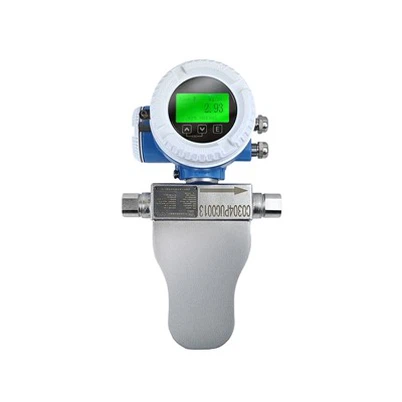
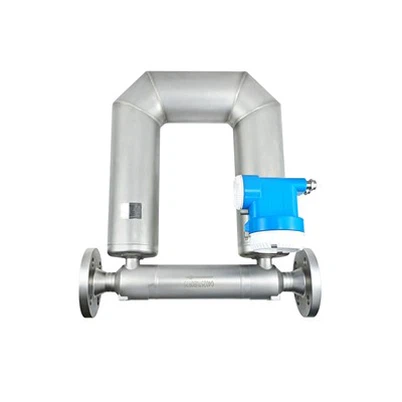
Coriolis mass flowmeters have a relatively simple structure. Coriolis mass flowmeters typically consist of a sensor and a transmitter, without complex mechanical transmission components or moving parts. This not only reduces the likelihood of equipment failure and lowers maintenance effort and cost, but also increases equipment reliability and service life. Their simple structure allows them to adapt well to harsh industrial environments, such as those subject to high temperatures, high pressures, and severe corrosion, ensuring continuous and stable operation.
Coriolis mass flowmeters are also relatively flexible in terms of installation. They have relatively relaxed requirements for installation location and piping conditions, generally not requiring the stringent straight pipe length requirements of some other flowmeters. This makes them more convenient and efficient for both retrofitting existing piping systems and designing and installing new ones, saving companies significant piping installation costs and time.
Furthermore, Coriolis mass flowmeters offer a fast response speed. They can quickly detect changes in fluid flow and promptly feed measurement data back to the control system. In production processes requiring rapid flow rate adjustments, such as material handling in automated production lines, their rapid response ensures efficient and stable operation, avoiding production accidents or product quality issues caused by untimely flow rate adjustments.
Finally, these flowmeters can measure multiple parameters simultaneously. In addition to mass flow, it can also measure fluid parameters such as density and temperature. This provides companies with valuable data for comprehensive process control and quality monitoring during production, helping them optimize production processes and improve productivity.
In summary, Coriolis mass flowmeters, with their high accuracy, excellent repeatability, wide measurement range, strong fluid adaptability, simple structure, flexible installation, fast response, and ability to measure multiple parameters, have become indispensable equipment in the field of flow measurement, providing reliable flow measurement support for production and development in numerous industries.