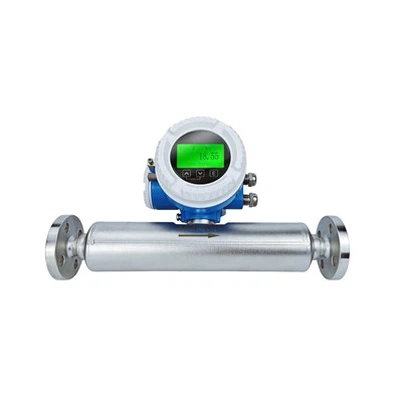
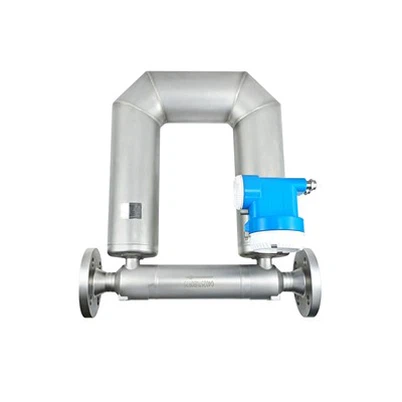
Coriolis Mass Flowmeter Installation Orientation Requirements
Leave a message
I. Basic Installation Orientation Requirements
[Direction Matches Fluid Flow Direction]
During installation, ensure that the direction of the arrow on the sensor nameplate aligns with the direction of fluid flow in the pipe.
If the fluid flow direction changes (e.g., reverse flow), the flowmeter installation orientation must be readjusted.
[Avoid areas of flow interference]
The installation location should avoid areas prone to turbulence, such as elbows, branch pipes, or valves. Straight pipe sections should be preferred.
II. Vertical Pipe Installation Requirements
[Bottom-Up Flow]
[It is recommended to install the flowmeter in a vertical pipe with bottom-up flow to ensure that the measuring tube is completely filled with fluid and reduce the risk of air bubbles or solids depositing.]
If installation in a top-down vertical pipe is unavoidable, a reducer or orifice plate should be installed to prevent the measuring tube from being evacuated.
III. Horizontal Pipe Installation Requirements
[Transmitter Housing Position]
When installed horizontally, the transmitter housing should be located above or below the pipe, avoiding being on the same level as the pipe, to prevent air bubbles or solids from accumulating in the measuring tube. Pipe Support and Fixing
For horizontal pipelines, ensure adequate support for the pipes before and after the flowmeter to prevent deformation or vibration of the measuring tube caused by external forces.
IV. Special Scenarios and Precautions
For high-viscosity or solid-containing fluids
For high-viscosity fluids or media containing solid particles, vertical installation (bottom-up flow) is preferred to facilitate the sinking of impurities and the escape of gases.
Cavitation Risk Control
Install the flowmeter downstream of the pump or at the lowest point in the vertical pipeline to ensure that the system pressure is higher than the vapor pressure of the media to prevent cavitation from affecting the measuring tube vibration.
V. Post-Installation Verification
Calibration and Commissioning
After installation, perform zero calibration and dynamic commissioning to ensure the flowmeter's measurement accuracy at the specified flow direction.
Seal Check
Check the seals of flange connections to prevent leakage that could cause measurement errors or safety hazards.
The installation direction of the Coriolis mass flowmeter directly affects measurement accuracy and stability. The optimal solution should be selected based on the fluid characteristics, pipeline layout, and operating conditions.