What are the requirements for straight pipe sections before and after a Coriolis mass flowmeter?
Leave a message
I. Introduction to Coriolis Mass Flowmeters
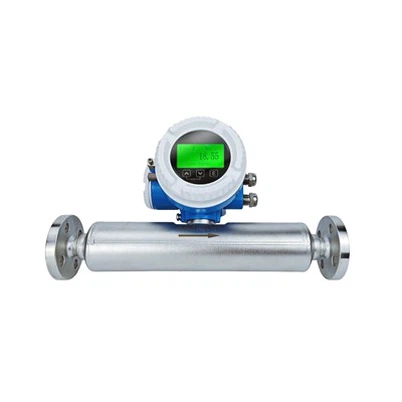
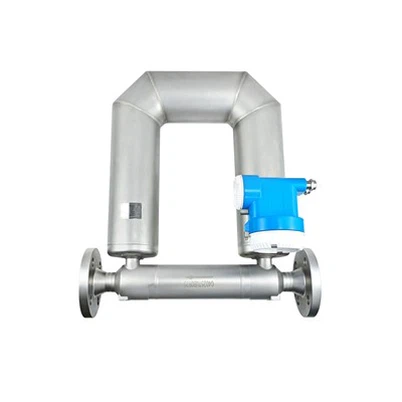
Coriolis mass flowmeters are instruments that directly measure fluid mass flow. They feature high measurement accuracy, fast response speed, and easy maintenance. They are widely used in the petroleum, chemical, food, and pharmaceutical industries.
II. Requirements for Straight Pipe Sections Before and After a Coriolis Mass Flowmeter
To ensure the measurement accuracy of a Coriolis mass flowmeter, straight pipe sections should be installed before and after the instrument. The length and diameter of these straight pipe sections must meet certain requirements. Generally, the straight pipe sections before and after the instrument should meet the following requirements:
1. Straight Pipe Length: The length of the front straight pipe section should be ≥ 10D, and the length of the rear straight pipe section should be ≥ 5D. Where D is the fluid diameter.
2. Straight Pipe Diameter: The diameter of the straight pipe sections before and after should be consistent.
3. Components that change the flow direction, such as elbows and manifolds, should be minimized or avoided.
The above three requirements are primarily intended to minimize interference with measurement caused by fluid deflection, vortices, and turbulence, ensuring stable flow direction and uniform velocity.
III. Setup and Installation Considerations
1. The front and rear straight pipe sections should be as straight as possible, avoiding bends or tilts.
2. Fluid control devices such as fluid filters and flow control valves should not be installed in the straight pipe sections.
3. Straight pipe sections should be kept clean and free of sediment and foreign matter.
4. Straight pipe sections should be installed to avoid mechanical vibration and shock to the instrument.
IV. Summary
The setup of the front and rear straight pipe sections of a Coriolis mass flowmeter is crucial to measurement accuracy. Proper setup and installation can effectively improve the stability and accuracy of the instrument. When designing and installing the front and rear straight pipe sections, they should be designed and installed according to the specific situation and requirements to avoid interference.