

What factors can affect the performance of a gas coriolis mass flow meter?
Leave a message

As a supplier of gas Coriolis mass flow meters, I've seen firsthand how various factors can impact the performance of these nifty devices. In this blog, I'll break down the key elements that can either make or break the accuracy and efficiency of a gas Coriolis mass flow meter.
Fluid Properties
Let's start with the fluid itself. The properties of the gas flowing through the meter play a huge role. Density is a major factor. Gas Coriolis mass flow meters work by measuring the Coriolis force, which is directly related to the mass of the fluid. If the gas density changes, it can throw off the meter's readings. For example, if you're measuring a gas mixture and the composition changes, the density will change too. This can happen in industrial processes where different gases are mixed in varying proportions.
Viscosity also matters. High - viscosity gases can cause more friction within the meter's tubes. This friction can affect the vibration of the tubes, which the meter relies on to measure the mass flow. If the viscosity is too high, it might slow down the tube's movement, leading to inaccurate readings.
Another aspect is the gas's compressibility. Compressible gases can change volume under pressure. When the pressure in the system fluctuates, the volume of the gas can change, and since the Coriolis meter measures mass flow, this volume change can introduce errors if not properly accounted for.
Operating Conditions
The environment in which the gas Coriolis mass flow meter operates is crucial. Temperature is a biggie. Most meters are calibrated at a specific temperature. If the operating temperature deviates from this calibration temperature, it can cause the meter's components to expand or contract. The tubes in the meter are very precise, and even a small change in their dimensions due to temperature can affect the Coriolis force measurement. For instance, if it's extremely hot, the tubes might expand slightly, altering the way they vibrate and thus the accuracy of the flow measurement.
Pressure is another important operating condition. Just like temperature, pressure can affect the gas's properties. High - pressure environments can compress the gas, changing its density. If the meter isn't designed to handle high pressures or if the pressure isn't properly compensated for, it can lead to inaccurate readings.
Vibration in the surrounding environment can also be a problem. Gas Coriolis mass flow meters rely on the precise vibration of their tubes to measure flow. External vibrations from nearby machinery or equipment can interfere with this internal vibration. This interference can make it difficult for the meter to accurately detect the Coriolis force, resulting in errors in the flow measurement.
Installation
How the gas Coriolis mass flow meter is installed can have a significant impact on its performance. The orientation of the meter matters. It's usually recommended to install the meter in a specific orientation, often vertical or horizontal, depending on the design. Installing it in the wrong orientation can cause issues such as uneven flow distribution within the tubes. If the gas doesn't flow evenly through the tubes, the Coriolis force measurement can be inaccurate.
The piping system around the meter is also important. The pipes should be properly sized and free of any obstructions. If the pipes are too small, it can cause high - velocity flow, which might create turbulence. Turbulence can disrupt the smooth flow of gas through the meter, affecting the accuracy of the measurement. On the other hand, if the pipes are too large, the gas flow might be too slow, making it harder for the meter to detect the Coriolis force.
Proper support of the meter is essential. If the meter isn't securely supported, it can vibrate independently of its intended operation. This unwanted vibration can interfere with the internal tube vibration and lead to measurement errors.
Meter Design and Calibration
The design of the gas Coriolis mass flow meter itself can influence its performance. The quality of the materials used in the construction of the meter is crucial. High - quality materials are more likely to withstand the effects of temperature, pressure, and the gas's properties over time. For example, using corrosion - resistant materials is important if the gas being measured is corrosive.
The shape and size of the tubes in the meter also matter. Different tube designs can have different sensitivities to the Coriolis force. Some designs might be more suitable for measuring low - flow rates, while others are better for high - flow applications.
Calibration is the key to accurate measurement. A well - calibrated meter is essential. Calibration should be done regularly to ensure that the meter is providing accurate readings. Over time, factors such as wear and tear, changes in the gas properties, and operating conditions can affect the meter's calibration. If the meter isn't calibrated correctly, it can give false readings, which can be a big problem in industrial processes where accurate flow measurement is critical.
Maintenance
Regular maintenance is necessary to keep the gas Coriolis mass flow meter performing at its best. Cleaning the meter is important. Over time, dirt, debris, and even chemical deposits can build up inside the tubes. This buildup can affect the flow of gas through the tubes and the way they vibrate. A dirty meter is more likely to give inaccurate readings.
Checking the meter's electrical connections is also crucial. Loose or corroded connections can disrupt the signal transmission between the meter's sensors and the control system. If the signal isn't transmitted correctly, the flow measurement data won't be accurate.
Inspecting the meter's components for wear and tear is essential. Things like the tubes, sensors, and electronics can degrade over time. If any of these components are worn out, they need to be replaced to ensure the meter continues to work properly.
Our Product Range
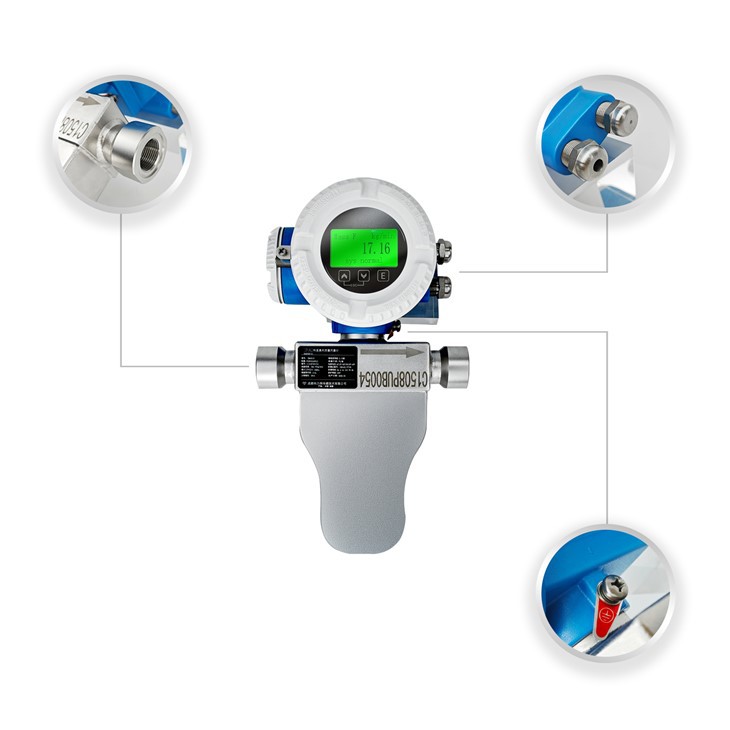
At our company, we offer a variety of gas Coriolis mass flow meters to suit different applications. For those who need to measure low - flow rates, we have the Micro Low Flow Coriolis Flow Meter. This meter is designed to accurately measure small amounts of gas flow, making it ideal for applications like laboratory testing or small - scale industrial processes.
If you're dealing with oxygen, our Oxygen Mass Flow Meter is a great choice. It's specifically designed to handle the unique properties of oxygen and provide accurate mass flow measurements.
For natural gas applications, especially compressed natural gas (CNG), our CNG Mass Flow Meter is up to the task. It can accurately measure the mass flow of CNG, which is important for applications like fueling stations and industrial gas usage.
Conclusion
In conclusion, many factors can affect the performance of a gas Coriolis mass flow meter. Fluid properties, operating conditions, installation, meter design, calibration, and maintenance all play important roles. By understanding these factors, you can take steps to ensure that your gas Coriolis mass flow meter operates accurately and efficiently.
If you're in the market for a gas Coriolis mass flow meter or need help with your existing meter, don't hesitate to reach out. We're here to assist you with all your flow measurement needs. Whether it's choosing the right meter for your application or providing maintenance and calibration services, we've got you covered. Contact us to start a discussion about your requirements and let's find the best solution together.

References
- Flow Measurement Handbook: Industrial Designs and Applications by Richard W. Miller
- Principles of Flow Measurement by David W. Spitzer


