

What are the calibration methods for a gas coriolis mass flow meter?
Leave a message

Hey there! As a supplier of gas Coriolis mass flow meters, I often get asked about the calibration methods for these nifty devices. So, I thought I'd share some insights on what those calibration methods are and why they're so important.
First off, let's talk about why calibration is a big deal. A gas Coriolis mass flow meter is a precision instrument that measures the mass flow rate of gases. It's used in a whole bunch of industries, from oil and gas to food and beverage. But for it to give accurate readings, it needs to be calibrated regularly. Without proper calibration, the readings can be way off, which can lead to all sorts of problems, like inefficient processes, inaccurate billing, and even safety issues.
Now, let's dive into the different calibration methods.
Primary Calibration
One of the most accurate ways to calibrate a gas Coriolis mass flow meter is through primary calibration. This method involves comparing the meter's readings with a reference standard that has a known accuracy. The reference standard is usually a high - precision device that's been calibrated against a national or international standard.
For primary calibration, we typically use a volumetric or gravimetric standard. In a volumetric standard, we measure the volume of gas that passes through the meter over a certain period of time. Then, we use the ideal gas law to convert that volume into mass. A gravimetric standard, on the other hand, measures the mass of the gas directly. This is often done by weighing a container before and after filling it with the gas.
The advantage of primary calibration is its high accuracy. It can provide calibration results with an uncertainty of less than 0.1%. However, it's also quite expensive and time - consuming. You need specialized equipment and a controlled environment to perform primary calibration accurately.
Secondary Calibration
If you're looking for a more cost - effective and practical option, secondary calibration might be the way to go. In secondary calibration, we use a transfer standard, which is a device that has been calibrated against a primary standard. This transfer standard is then used to calibrate the gas Coriolis mass flow meter.
A common transfer standard is a master flow meter. This master meter has been carefully calibrated and is known to have a high level of accuracy. We connect the master meter and the meter to be calibrated in series, and then we pass the gas through both meters simultaneously. By comparing the readings of the two meters, we can determine if the meter to be calibrated needs adjustment.
Secondary calibration is less accurate than primary calibration, with an uncertainty typically in the range of 0.2% - 1%. But it's much faster and cheaper. It can be done on - site, which means you don't have to send your meter to a specialized calibration laboratory.
Dry Calibration
Dry calibration is another method that's often used for gas Coriolis mass flow meters. This method doesn't involve the actual flow of gas. Instead, it uses the meter's built - in sensors and electronics to perform a self - check.
During dry calibration, the meter measures its own physical properties, such as the stiffness of the measuring tubes and the natural frequency of vibration. These properties are then compared with the values that were measured during the initial calibration of the meter. If there are any significant differences, the meter can be adjusted accordingly.
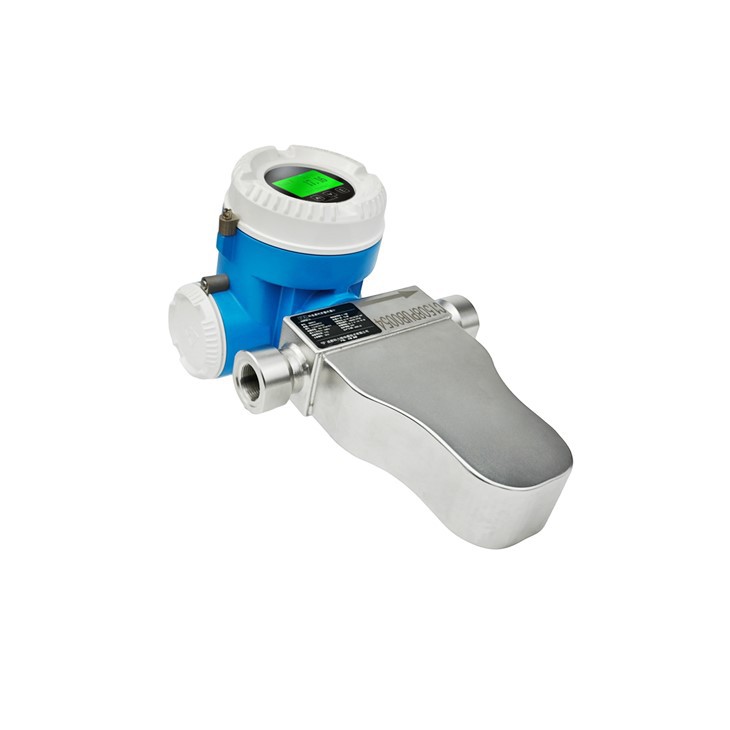

Dry calibration is quick and easy to perform. It can be done in a matter of minutes, and it doesn't require any external equipment or gas supply. However, it's not as accurate as primary or secondary calibration. It's mainly used as a preliminary check to see if the meter is functioning properly. If the dry calibration shows that there are issues, a more comprehensive calibration method should be used.
Wet Calibration
Wet calibration, as the name suggests, involves the actual flow of gas through the meter. This is the most common method for calibrating gas Coriolis mass flow meters.
In wet calibration, we use a known gas with a well - defined composition and flow rate. The gas is passed through the meter, and the meter's readings are compared with the known values. If there are any discrepancies, the meter is adjusted until the readings match the known values.
Wet calibration can be done using either a primary or secondary standard, depending on the level of accuracy required. It provides a more realistic calibration because it takes into account the actual flow conditions of the gas. However, it requires a gas supply and a proper test setup, which can be a bit more complicated.
Importance of Calibration Frequency
Now, you might be wondering how often you should calibrate your gas Coriolis mass flow meter. Well, it depends on a few factors.
If the meter is used in a critical application where accuracy is of utmost importance, like in a chemical plant or a pharmaceutical manufacturing facility, it should be calibrated more frequently. A good rule of thumb is to calibrate the meter at least once a year.
On the other hand, if the meter is used in a less critical application, such as in a ventilation system, calibration once every two to three years might be sufficient.
It's also important to calibrate the meter after any major maintenance or repair work. This ensures that the meter is still providing accurate readings after the work has been done.
Choosing the Right Calibration Method for Your Needs
When it comes to choosing the right calibration method for your gas Coriolis mass flow meter, you need to consider a few things.
First, think about the level of accuracy you need. If you require high - precision measurements, primary calibration might be the best option. But if you can tolerate a slightly lower level of accuracy and want a more cost - effective solution, secondary calibration could be the way to go.
Next, consider the practicality of the calibration method. If you need to calibrate the meter on - site and don't have access to a specialized laboratory, secondary or dry calibration might be more suitable.
Finally, think about your budget. Primary calibration is the most accurate but also the most expensive. Secondary calibration is more affordable, and dry calibration is the cheapest option.
Our Products and Services
As a supplier of gas Coriolis mass flow meters, we offer a wide range of products to meet your needs. Whether you're looking for an Air Flow Meter Sensor for your ventilation system, an Oxygen Mass Flow Meter for a medical application, or a CNG Mass Flow Meter for a natural gas refueling station, we've got you covered.
We also provide calibration services for our meters. Our team of experts can perform both on - site and off - site calibration using the latest calibration methods. We ensure that your meters are calibrated to the highest standards, so you can have confidence in their accuracy.
If you're interested in our products or calibration services, don't hesitate to get in touch. We're always happy to discuss your requirements and find the best solution for you. Contact us today to start the conversation about your gas Coriolis mass flow meter needs.
References
- "Flow Measurement Handbook: Industrial Designs and Applications" by Richard W. Miller
- "Coriolis Flowmeters: Fundamentals, Applications, and Troubleshooting" by Ravi K. Singh
So, there you have it! That's a rundown of the calibration methods for gas Coriolis mass flow meters. I hope this blog post has been helpful to you. If you have any questions or need more information, feel free to reach out.


