

How does a high pressure mass flow meter work in a pulsatile fluid system?
Leave a message

In the realm of fluid measurement, accurately gauging the mass flow rate in a pulsatile fluid system presents unique challenges. High pressure mass flow meters have emerged as a crucial solution for industries dealing with such complex fluid dynamics. As a supplier of high - quality High Pressure Mass Flow Meters, I am excited to delve into how these sophisticated devices operate within pulsatile fluid systems.
Understanding Pulsatile Fluid Systems
Pulsatile fluid systems are characterized by the periodic variation of fluid flow. This pulsation can occur due to various reasons, such as the operation of reciprocating pumps, compressors, or the natural rhythm of biological systems in medical applications. In industrial settings, pulsatile flow can lead to inaccurate flow measurements if not properly accounted for. The fluctuations in flow velocity and pressure can cause traditional flow meters to provide inconsistent or unreliable readings.
The Basics of High Pressure Mass Flow Meters
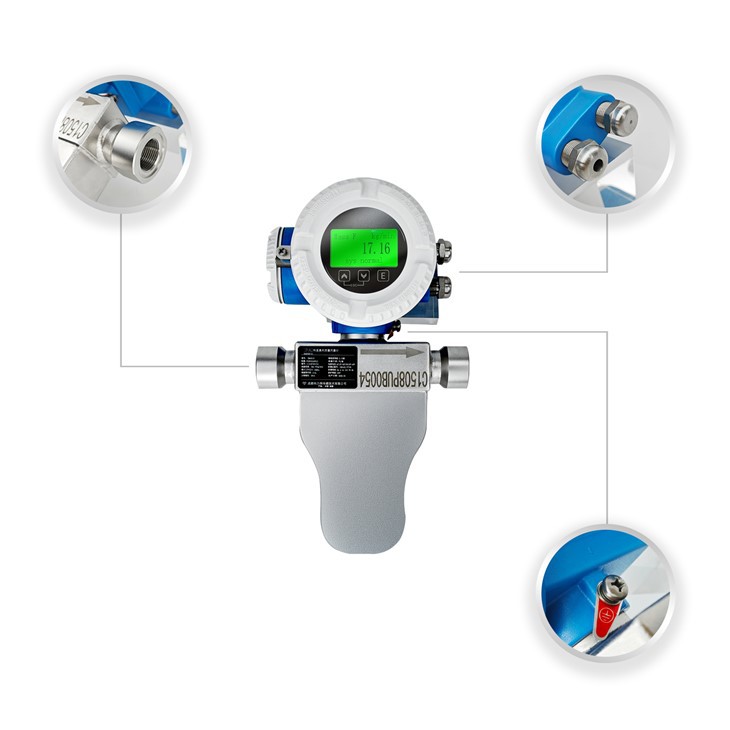
A High Pressure Mass Flow Meter is designed to measure the mass flow rate of a fluid, regardless of changes in temperature, pressure, or fluid composition. This is in contrast to volumetric flow meters, which measure the volume of fluid passing through a given point. Mass flow measurement is essential in many applications, such as chemical processing, where the amount of a substance being transferred is critical for accurate reactions and quality control.
One of the key technologies used in high pressure mass flow meters is the Coriolis Effect Flow Meter. The Coriolis effect is a phenomenon that occurs when a fluid is flowing through a vibrating tube. As the fluid moves through the tube, it experiences a Coriolis force, which causes the tube to twist. The amount of twist is directly proportional to the mass flow rate of the fluid.
How High Pressure Mass Flow Meters Work in Pulsatile Fluid Systems
1. Design Considerations
High pressure mass flow meters used in pulsatile fluid systems are specially designed to withstand the dynamic forces associated with pulsating flow. The meter's construction materials are chosen for their strength and durability, ensuring that the device can operate reliably under high pressure and fluctuating flow conditions.
The sensor tubes in a Coriolis - based high pressure mass flow meter are carefully engineered to have a specific natural frequency. This frequency is selected to minimize the effects of external vibrations and to ensure that the meter can accurately detect the Coriolis force even in the presence of pulsations.
2. Signal Processing
In a pulsatile fluid system, the flow signal is constantly changing. High pressure mass flow meters use advanced signal processing techniques to filter out the noise caused by the pulsations and extract the true mass flow rate. The meter's electronics analyze the frequency and amplitude of the tube's vibration to determine the mass flow rate.
Digital signal processing algorithms are employed to smooth out the flow signal and provide a stable and accurate reading. These algorithms can be adjusted to suit the specific characteristics of the pulsatile flow, such as the frequency and amplitude of the pulsations.

3. Compensation for Pulsations
To further improve the accuracy of the measurement in a pulsatile fluid system, high pressure mass flow meters often incorporate compensation techniques. These techniques take into account the effects of the pulsations on the Coriolis force and the tube's vibration.
For example, some meters use a multi - point calibration method to compensate for the non - linear effects of pulsations. This involves calibrating the meter at different flow rates and pulsation frequencies to create a compensation curve. The meter then uses this curve to adjust the measured mass flow rate based on the current flow conditions.
Applications of High Pressure Mass Flow Meters in Pulsatile Fluid Systems
1. Natural Gas Industry
In the natural gas industry, high pressure mass flow meters are used to measure the flow of gas in pipelines. The flow of natural gas can be pulsatile due to the operation of compressors and valves. Accurate mass flow measurement is crucial for billing, custody transfer, and process control.
CNG Mass Flow Meter is a type of high pressure mass flow meter that is specifically designed for measuring the flow of compressed natural gas (CNG). These meters can accurately measure the mass flow rate of CNG in pulsatile systems, ensuring that the amount of gas being transferred is accurately accounted for.
2. Chemical Processing
In chemical processing plants, pulsatile flow can occur in various stages of the production process, such as during the transfer of liquids between tanks or the operation of pumps. High pressure mass flow meters are used to measure the mass flow rate of chemicals, ensuring that the correct amount of each substance is added to the reaction vessels.
Accurate mass flow measurement is essential for maintaining the quality and consistency of the chemical products. By using high pressure mass flow meters in pulsatile fluid systems, chemical manufacturers can improve the efficiency of their processes and reduce waste.
3. Medical Applications
In medical applications, such as the delivery of oxygen or other gases to patients, pulsatile flow can occur due to the patient's breathing. High pressure mass flow meters are used to accurately measure the mass flow rate of the gases, ensuring that the patient receives the correct amount of oxygen.
These meters are designed to be highly accurate and reliable, even in the presence of the small - amplitude pulsations associated with human breathing. This is crucial for the safety and well - being of the patients.
Advantages of Using High Pressure Mass Flow Meters in Pulsatile Fluid Systems
1. High Accuracy
High pressure mass flow meters offer a high level of accuracy in measuring the mass flow rate, even in pulsatile fluid systems. The advanced signal processing and compensation techniques used in these meters ensure that the measured value is close to the true mass flow rate.
2. Wide Range of Applications
These meters can be used in a variety of industries and applications, from natural gas to chemical processing and medical devices. Their ability to operate under high pressure and in pulsatile fluid systems makes them a versatile solution for many flow measurement challenges.
3. Low Maintenance
High pressure mass flow meters are generally low - maintenance devices. They have no moving parts other than the vibrating tube, which reduces the risk of mechanical failure. This results in lower maintenance costs and less downtime for the users.
Conclusion
High pressure mass flow meters play a vital role in accurately measuring the mass flow rate in pulsatile fluid systems. Through their advanced design, signal processing, and compensation techniques, these meters can overcome the challenges posed by the pulsations and provide reliable and accurate measurements.
As a supplier of High Pressure Mass Flow Meter, we are committed to providing our customers with the highest quality products and the latest technologies. Our meters are designed to meet the specific needs of various industries and applications, ensuring that our customers can achieve accurate and efficient flow measurement in pulsatile fluid systems.
If you are looking for a reliable solution for mass flow measurement in your pulsatile fluid system, we invite you to contact us for a detailed discussion. Our team of experts will be happy to assist you in selecting the right high pressure mass flow meter for your application and provide you with the necessary support and service.
References
- Baker, R. C. (2000). Flow Measurement Handbook: Industrial Designs, Operating Principles, Performance, and Applications. Cambridge University Press.
- Spitzer, D. W. (2001). Flow Measurement: Practical Guides for Measurement and Control. ISA - The Instrumentation, Systems, and Automation Society.
- Wriedt, T. (2006). Flow Measurement. Springer.


