

Can a gas coriolis mass flow meter be used for gas flow measurement in a mining industry?
Leave a message

Hey there! As a supplier of gas Coriolis mass flow meters, I often get asked if these nifty devices can be used for gas flow measurement in the mining industry. Well, let's dive right into it and explore this topic in detail.
First off, let's understand what a gas Coriolis mass flow meter is. A Coriolis mass flow meter works based on the Coriolis effect. When a fluid (in this case, gas) flows through a vibrating tube, the Coriolis force causes the tube to twist. The amount of twist is directly proportional to the mass flow rate of the fluid. This technology offers several advantages, such as high accuracy, direct mass flow measurement (which means it's not affected by changes in density, temperature, or pressure), and the ability to measure a wide range of fluids.
Now, let's talk about the mining industry. Mining operations involve a variety of processes where gas flow measurement is crucial. For example, in underground mines, ventilation systems are essential to maintain a safe working environment. These systems use large amounts of air (a gas) to remove harmful gases like methane, carbon monoxide, and dust particles. Accurately measuring the gas flow in these ventilation systems is vital to ensure that the air quality is within safe limits and that the ventilation system is operating efficiently.
Another area in mining where gas flow measurement is important is in the processing of minerals. Many mining processes involve the use of gases such as oxygen, nitrogen, and hydrogen. For instance, in the flotation process, which is used to separate valuable minerals from gangue, air is injected into the slurry to create bubbles that attach to the minerals and carry them to the surface. Measuring the flow rate of the injected air is critical to optimize the flotation process and improve the recovery of valuable minerals.
So, can a gas Coriolis mass flow meter be used in these mining applications? The answer is a resounding yes! Here are some reasons why:
High Accuracy
One of the main advantages of using a gas Coriolis mass flow meter in the mining industry is its high accuracy. In ventilation systems, even a small error in gas flow measurement can have significant consequences for the safety of miners. A Coriolis mass flow meter can provide accurate measurements within a very narrow range, typically ±0.1% to ±0.5% of the measured value. This high level of accuracy ensures that the ventilation system is operating at the optimal level and that the air quality is maintained within safe limits.
Direct Mass Flow Measurement
Unlike other types of flow meters that measure volumetric flow rate, a Coriolis mass flow meter measures the mass flow rate directly. This is a significant advantage in the mining industry because the density of gases can vary depending on factors such as temperature, pressure, and composition. By measuring the mass flow rate, a Coriolis mass flow meter eliminates the need for density compensation, which can simplify the measurement process and reduce the potential for errors.
Wide Range of Gas Compatibility
Gas Coriolis mass flow meters are compatible with a wide range of gases, including air, oxygen, nitrogen, hydrogen, and methane. This makes them suitable for use in various mining applications, from ventilation systems to mineral processing. Whether you need to measure the flow rate of a single gas or a mixture of gases, a Coriolis mass flow meter can handle the job.

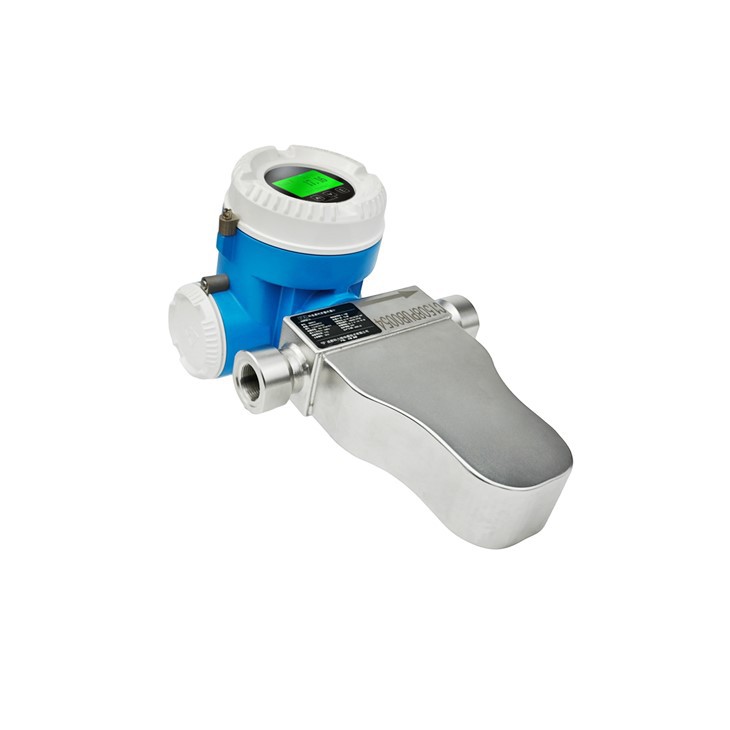
Low Maintenance
Mining operations are often harsh and demanding environments, with dust, moisture, and vibrations being common challenges. Gas Coriolis mass flow meters are designed to be robust and reliable, with few moving parts. This means that they require minimal maintenance and are less likely to break down, reducing downtime and maintenance costs.
Versatility
Gas Coriolis mass flow meters come in a variety of sizes and configurations to suit different applications. Whether you need to measure the flow rate of a small gas stream in a laboratory or a large gas flow in a ventilation system, there is a Coriolis mass flow meter available that can meet your needs. For example, our Micro Low Flow Coriolis Flow Meter is designed for measuring low flow rates with high accuracy, while our Coriolis Effect Flow Meter is suitable for a wide range of flow rates and applications.
However, like any technology, gas Coriolis mass flow meters also have some limitations. One of the main limitations is their relatively high cost compared to other types of flow meters. This can be a significant factor for mining companies, especially those operating on a tight budget. Additionally, gas Coriolis mass flow meters require a certain amount of straight pipe upstream and downstream of the meter to ensure accurate measurements. In some mining applications, where space is limited, this may not be feasible.
Despite these limitations, the benefits of using a gas Coriolis mass flow meter in the mining industry outweigh the drawbacks. The high accuracy, direct mass flow measurement, wide range of gas compatibility, low maintenance, and versatility make them an excellent choice for gas flow measurement in mining applications.
If you're in the mining industry and looking for a reliable and accurate gas flow measurement solution, I encourage you to consider our gas Coriolis mass flow meters. We offer a range of products, including the Micro Low Flow Coriolis Flow Meter, Coriolis Effect Flow Meter, and CNG Mass Flow Meter, to meet your specific needs. Our team of experts is always available to provide you with technical support and advice to help you choose the right product for your application.
So, if you're interested in learning more about our gas Coriolis mass flow meters or would like to discuss your specific requirements, please don't hesitate to get in touch. We'd love to hear from you and help you find the perfect solution for your gas flow measurement needs in the mining industry.
References
- "Flow Measurement Handbook: Industrial Designs and Applications" by Richard W. Miller
- "Mining Ventilation and Air Conditioning" by J. C. Harries
- "Mineral Processing Technology: An Introduction to the Practical Aspects of Ore Treatment and Mineral Recovery" by Barry A. Wills and Tim Napier-Munn


